
Small Grant 2021 Update: LCCMS - Cave Climate
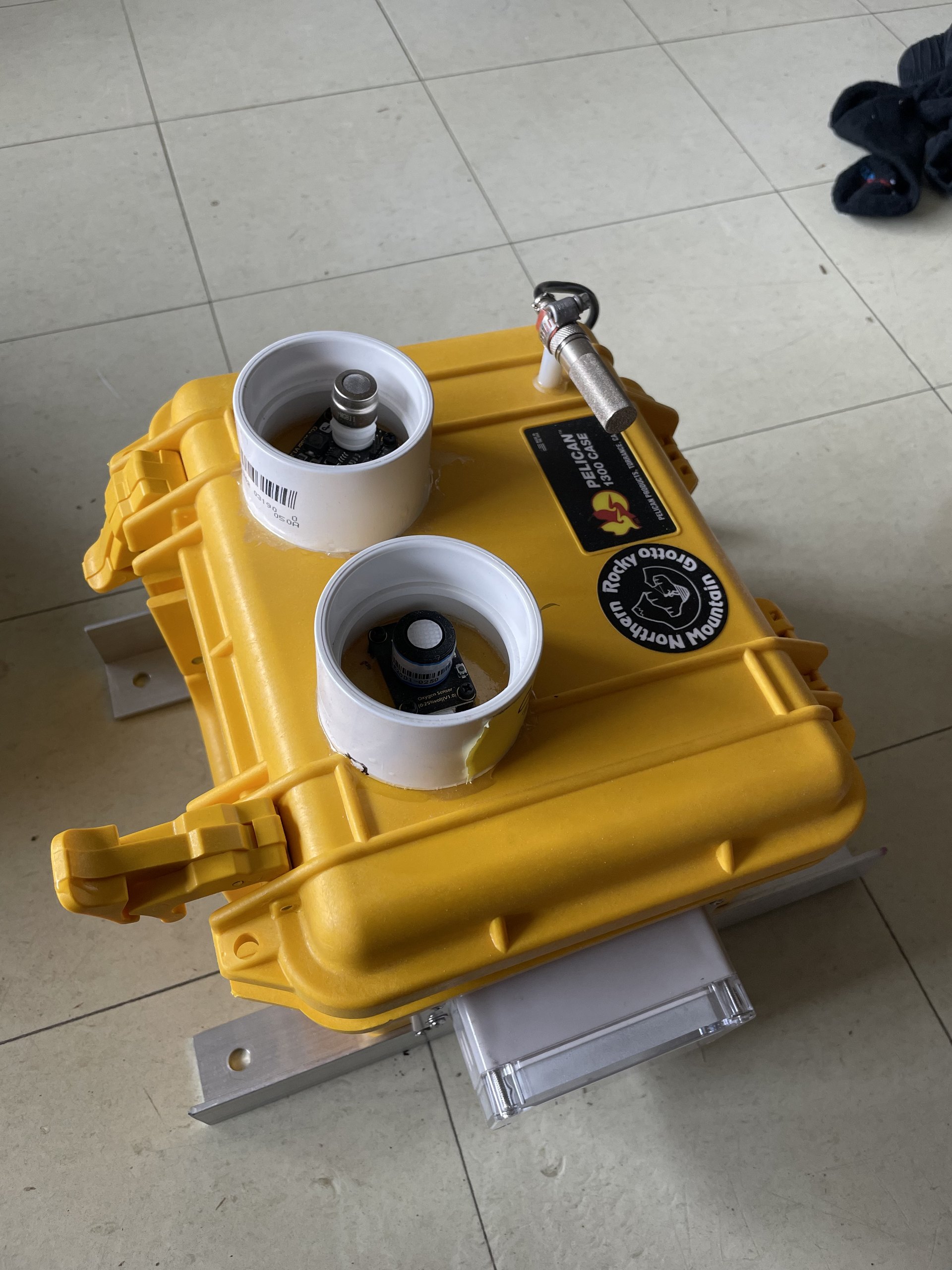
The Long-Term Cave Climate Monitoring Sensor (LCCMS) is a multi-year project partially funded by the Northern Rocky Mountain Grotto Small Grant (2021). The goal of the project is to help better constrain the response of variables within caves to climatic change. Cave systems have provided important chronologies (record of events by time) of climatic change across the world. Several factors within caves have been used to create these records such as cave sediments (Mandel et al, 2021) and most famously, speleothems (formations) (Comas-bru et al., 2020; Moseley et al., 2021, and others).
While these chronologies have provided many great advances in climate science and out understanding of climate change, there is a level of uncertainty. This uncertainty lies in understanding more completely how cave systems log climatic change within their passages (Fleitmann, Dominik Francisco Cruz Jr., Julie Cole and Kim Cobb, 2008). While we can work to understand the geochemistry of formations to understand how it takes in and reflects groundwater geochemistry, we still wouldn’t know how caves take in oxygen, CO2, or how the cave reflects changes resulting from specific events. The best method for understanding cave climate is direct monitoring.
Climatic monitoring systems are available on everything from ebay to amazon. These consumer level systems are good enough for your home weather system and hobby-level weather station, but they lack the sensors, durability, and form factors for cave implementation. In order to properly and effectively measure cave system climate, a custom sensor has to be designed. The LCCMS is a compact, durable, and specific sensor that measures relative humidity, CO2, O2, temperature, and barometric pressure.
There have been several updates to the LCCMS since funding from the NRMG (Oleson, 2021):
- Board design: We have changed our board from the Arduino UNO/MEGA system to the Raspberry Pi 4 board. This change comes on the tail of a few foreseen complications and adaptations. Our primary motivation to change to this board is that the Pi has a more robust data logging capability, a more refined and less proprietary programming suite and language. We hope this board will allow us more flexibility in programming and features as we move on.
- Housing: Our original design was quite futuristic and involved a milled aluminum housing with mast for the anemometer – we have since migrated to a pelican case. We had planned on making this change as we moved from Mark I to Mark II design platform. The pelican case, while being plastic, has longevity over the aluminum which will eventually corrode in a cave environment, especially in contact with SS hardware. This case also has a better seal and pressure release capabilities than our casing. Lastly, the pelican case has more mounting capabilities than the aluminum casing.
- Anemometer: we have decided to forgo the inclusion of the anemometer due to questions about its longevity and sensitivity air flow. Not to mention, there are numerous studies on airflow already being implemented in caves (See work of Andreas Pflitsch of the University of Bochum).
- Battery Power: The first implementation of the Cave Climate sensor is planned to be held in a show cave for ease of access and power. The goal of the system is to be implemented in a remote cave where “shore power” is unavailable. The power draw of a “fully loaded” raspberry pi is 5.5W (all 3 cores busy). We have looked into powering this sensor with everything from a custom battery configuration to a car battery and are still mulling over the options. Whatever we choose, it will need to be contained from the elements and from polluting the cave environment. In cases when the sensor is close to the entrance of the cave, a solar panel for charging could be used but that requires maintenance for a system that provides intermittent power.
- Timeline: The LCCMS is broadly in schedule. Work continues with delay only to minor goals due to the team’s other obligations. This coming summer will be a prime time to dive deeper into the work on the sensor.
Our team is very excited to see what comes from this sensor. We can’t wait for the excitement that will result from the monitor being installed in situ and allowing it to collect data to its heart’s content. We hope to update the NSS body through the NSS News as soon as this summer and as late as this fall with implementation. Out first obligation, however, lies with the NRMG as a funding partner, as such, we are happy to answer any questions and fulfill any obligations the grotto has of us.
Thank you for your support and contributions to this project, it is at your hands that science is being done.
Any correspondence on the LCCMS can be directed towards E.W. Oleson at [email protected] (please include LCCMS in your subject line) and more information can be found at www.ethanoleson.com.
References:Comas-bru, L., Rehfeld, K., Roesch, C., Amirnezhad-mozhdehi, S., Harrison, S.P., Atsawawaranunt, K., Ahmad, S.M., Brahim, Y.A., and Baker, A., 2020, SISALv2 : a comprehensive speleothem isotope database with multiple age – depth models: , p. 2579–2606.
Fleitmann, Dominik Francisco Cruz Jr., Julie Cole and Kim Cobb, P.T., 2008, White paper on “Speleothem-based climate proxy records“:
Moseley, G.E., Edwards, R.L., Lord, N.S., Spötl, C., and Cheng, H., 2021, Speleothem record of mild and wet mid-Pleistocene climate in northeast Greenland: , p. 1–14.
Oleson, E.W., 2021, LCCMS: A Long-Term Cave Climate Monitoring Sensor: NSS News July Issue Vol 79 No.7., p.10-11.
Comments
Nobody has said anything yet. If you have been here, or you know something the write-up misses, say so.